“How does our opponent do this so well?

Deep Benchmarking with Reverse Engineering: Understanding Not What is Seen, But What is Hidden
Deep Benchmarking with Reverse Engineering: Understanding Not What is Seen, But What is Hidden
In today’s competitive environment, it is not enough to look only at results. What truly makes the difference is being able to analyze the mechanisms behind those results. This is exactly where reverse engineering becomes the most critical complement to benchmark studies.
Thanks to the reverse engineering approach:
- It reveals not only what competitor products do, but how they do it
- The root causes of performance differences are analyzed
- Design choices and engineering intelligence become visible
Layered Insight with Reverse Engineering
Layered Insight with Reverse Engineering
The reverse engineering process brings a three-dimensional perspective to benchmark analysis:
- Technical Depth: Product architecture, component selection, and integration strategies are examined in detail
- Process Transparency: Production, maintenance, and sustainability approaches are analyzed
- Decision Logic: It becomes clear why the competitor chose a particular path
This approach is not only an analysis, but also a process of learning and redesign.
Proactive Strategy with Reverse Engineering
With reverse engineering-supported benchmark studies:
- Not only the current competitive position, but also future trends can be anticipated
- Product development processes move forward in a more conscious and data-driven way
- Trial-and-error costs are significantly reduced

Result: Going Beyond Competition with Reverse Engineering
Reverse engineering transforms benchmark studies from a passive comparison tool into an active engine of innovation. In this way, it becomes possible not only to catch up with competitors, but to develop strategies that surpass them.
Because the real competitive advantage lies not in copying what you see, but in recreating what you have understood.
This question is an internal voice that almost every innovation team is familiar with. At this point, reverse engineering turns your benchmark work from an ordinary analysis into a strategic weapon of competition.
Understanding Benchmark or “Seeing it”?
Traditional benchmark works tell us what is “what” – which product is better, which system is more efficient. But reverse engineering gives us the answer to the question “how”:
- Under Performance Approaches
- Critical Design Decisions
- Innovation Opportunities
Not Only Competitor Analysis, Self Understanding Journey
In line mark studies with retrospective engineering, we actually achieve two gains:
- We understand the technical details behind the success of the opponent
- We discover the potential weaknesses of our own product
This bilateral perspective provides a competitiveness not only from following, but from predicting.
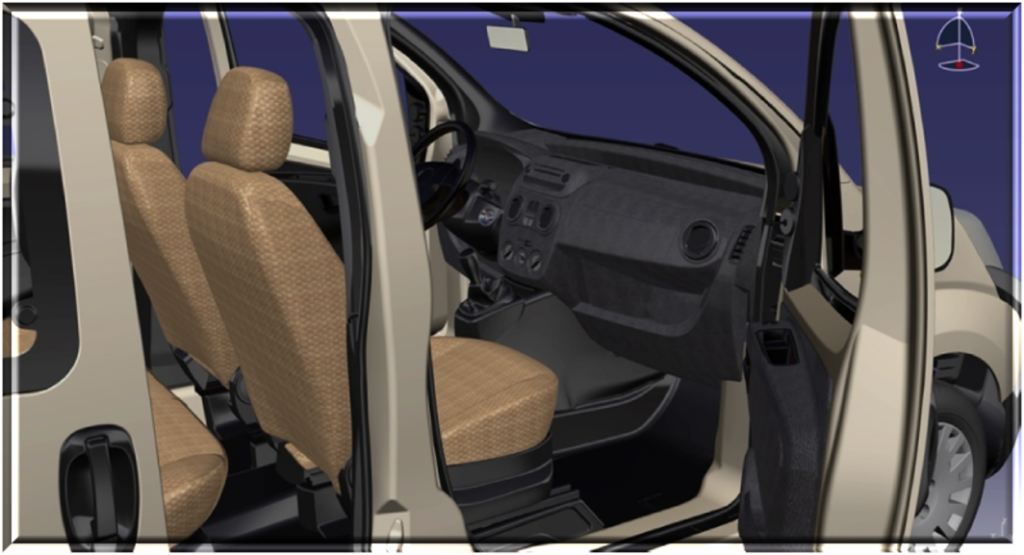
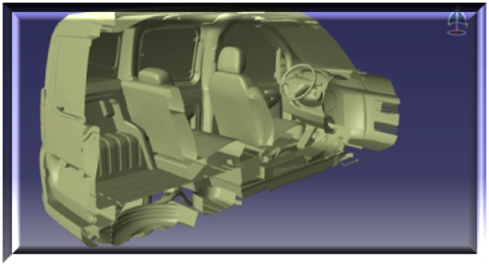
How do we process the process?
- Target Determination: “Which feature should we focus on the metric of the feature/performance?”
- Systematic Analysis: Dividing the product into its components and benchmark tests on each layer: Design, Production, Maintenance, Sustainability,…
- Data-Oriented Insight: Convert raw performance and analysis data to business intelligence
- Strategy Development: Integrating findings into our own product roadmap
Result: Smarter Innovation
“The best benchmark is not only to show where the opponent is, but where you can be.”
Backward engineering-supported benchmark studies accelerate our innovation process and enable us to make more accurate decisions with less trial-recession. This approach gives us an important advantage not only in today’s competition, but also in shaping tomorrow’s technologies.
“The best benchmark is not only to show where the opponent is, but where you can be.”